 Skip to content
After experiencing water damage, it’s essential to act quickly and methodically to address potential mold growth. Start by evaluating the area for visible signs of mold and identifying moisture sources. Document your findings and make certain you’re equipped with protective gear. As you begin the removal process, proper techniques and tools will play a significant role in your success. But understanding the complete scope of mold remediation requires more than just initial actions.
Key Takeaways
- Inspect the affected area for visible mold, water damage, and humidity levels, documenting findings for insurance purposes.
- Wear protective gear and seal off the area to prevent mold spread and protect occupants from exposure.
- Identify and remove contaminated materials like drywall or carpet, and clean surfaces with mold removal solutions.
- Use HEPA vacuums to capture mold spores and ensure thorough cleaning of all surfaces.
- Maintain low humidity and regularly check for leaks to prevent future mold growth.
Your Safe Guide to Mold Removal
When you face mold growth after water damage, it’s essential to act swiftly and safely to protect your health and property.
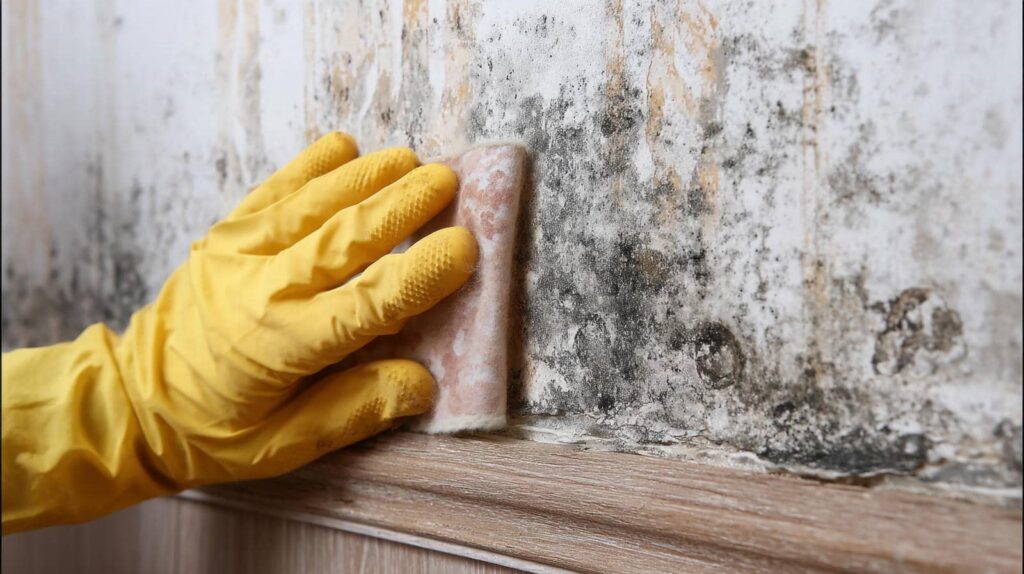
Begin by identifying the affected areas and evaluating the extent of the damage. Use appropriate mold removal techniques, such as scrubbing surfaces with a mixture of water and detergent or employing specialized mold removers.
Make sure you wear protective gear, including gloves and masks, to minimize health risks associated with inhaling mold spores. Seal off the area to prevent spread and ventilate the space adequately during removal.
After cleaning, monitor the area for any signs of recurrence. If the infestation is extensive, consider consulting a professional to effectively manage the situation and safeguard your home and health.
Recognizing Mold Risks After Water Damage
Although water damage can create ideal conditions for mold growth, many homeowners underestimate the risks associated with this hidden threat. Understanding the various mold types and their risk factors is essential for maintaining a safe environment.
Mold can proliferate rapidly in damp conditions, leading to potential health risks and structural damage.
To effectively recognize mold risks, consider the following:
- Humidity levels: High indoor humidity promotes mold growth.
- Water source: Flooding or leaks can introduce diverse mold types.
- Material composition: Organic materials like wood and drywall are susceptible.
- Time elapsed: Mold can develop within 24-48 hours post-water damage.
Identify Signs of Mold Growth for Effective Removal
To effectively remove mold, you need to identify its signs first.
Look for visible mold patches, as well as any musty odors that could indicate hidden growth.
Additionally, inspect water stains on walls and ceilings, which may signal moisture issues conducive to mold development.
Visible Mold Patches
As you inspect your property for signs of water damage, visible mold patches can serve as clear indicators of ongoing moisture issues.
These patches not only compromise your space aesthetically but also pose health risks. Identifying them promptly is essential for effective remediation.
Look for:
- Dark spots on walls or ceilings
- Areas of discoloration on furniture or carpets
- Green, black, or white fuzzy growths
- Affected surfaces that feel damp or have a musty texture
Addressing visible mold quickly can help minimize health risks associated with mold exposure, including respiratory problems and allergic reactions.
Musty Odor Detection
How can you tell if mold is lurking in your home? One of the most common indicators is a persistent musty smell. This odor often signals mold growth, indicating potential odor sources like damp areas or hidden water damage.
Start by sniffing around areas prone to moisture, such as basements, bathrooms, and behind appliances. If you notice a musty smell, it’s essential to investigate further. Check for leaks, condensation, or any water accumulation, as these conditions can foster mold development.
Water Stains Inspection
Inspecting water stains is essential for identifying potential mold growth in your home. Water stains can indicate underlying issues that lead to mold. Understanding the water stain causes and employing effective inspection methods will help you address problems before they escalate.
Check for discoloration or dark spots on walls and ceilings.
Look for peeling paint or wallpaper, which may indicate moisture retention.
Inspect hidden areas like behind appliances or under sinks.
Use moisture meters to detect hidden dampness in materials.
Gather Tools and Safety Gear for Mold Removal
Before starting mold removal, you need to gather the right tools and protective gear.
Essential tools include scrapers, brushes, and vacuum cleaners designed for hazardous materials, while protective gear should encompass gloves, masks, and goggles.
Ensuring you have these items ready will help you effectively tackle mold while prioritizing your safety.
Essential Mold Removal Tools
As you prepare to tackle mold removal after water damage, gathering the right tools and safety gear is crucial for effective remediation.
You’ll need a few key items to guarantee you can handle mold testing and apply cleaning solutions effectively. Here’s what to collect:
- Mold Testing Kit: To identify the type and extent of mold present.
- Scrub Brushes: For scrubbing surfaces where mold has settled.
- HEPA Vacuum: To effectively capture mold spores during cleanup.
- Cleaning Solutions: Use EPA-recommended solutions or a mixture of vinegar and water for safe mold eradication.
With these tools on hand, you’ll be better equipped to handle the mold problem and create a safer environment for yourself and others.
Protective Gear Essentials
Mold removal can pose serious health risks, so don’t underestimate the importance of protective gear. First, invest in high-quality protective gloves to shield your hands from mold spores and chemical irritants. Opt for nitrile gloves, as they offer better resistance than latex.
Next, wear safety goggles to protect your eyes from airborne particles. This will help you avoid irritation and guarantee clear visibility during the removal process.
Additionally, consider using a mask rated for mold spores, like an N95 respirator, to filter out harmful particles while you work.
By equipping yourself with these essentials, you’re not only safeguarding your health but also enhancing your effectiveness in tackling mold removal safely and efficiently.
Thoroughly Clean and Disinfect Affected Areas
Start by thoroughly cleaning and disinfecting all affected areas to prevent further mold growth and secure a safe environment.
Use effective cleaning solutions and disinfection techniques to ascertain the removal of mold spores and contaminants.
- Identify all surfaces impacted by water damage.
- Apply appropriate cleaning solutions, such as vinegar or commercial mold removers.
- Utilize disinfection techniques, including scrubbing and steam cleaning, to eliminate mold.
- Allow surfaces to dry completely to inhibit future mold development.
Proven Strategies to Prevent Future Mold Growth
After cleaning and disinfecting affected areas, implementing strategies to prevent future mold growth becomes essential for maintaining a safe and healthy environment.
Start by using mold resistant materials in your home, especially in areas prone to moisture, like bathrooms and kitchens. These materials can markedly reduce mold proliferation.
Next, focus on humidity control; keep indoor humidity levels below 50% by using dehumidifiers and ensuring proper ventilation.
Regularly inspect your home for leaks and address them immediately to prevent moisture accumulation.
Additionally, promote air circulation by using fans and keeping spaces uncluttered.
When Should You Call in the Pros for Mold Removal?
How can you determine when it’s time to call in professionals for mold removal? If you notice persistent mold growth, it’s essential to act quickly. Ignoring the issue can lead to serious mold health effects that affect you and your family.
Here are some signs it’s time to seek professional services:
- The mold covers a large area (more than 10 square feet)
- You see mold in HVAC systems or ducts
- You experience health symptoms like coughing or respiratory issues
- There’s a musty odor that won’t go away
In these cases, professionals have the expertise and equipment to safely remove mold and prevent future growth, ensuring a healthier living environment for everyone.
Don’t hesitate to reach out for help when needed.
Frequently Asked Questions
Can Mold Growth Occur After Minor Water Leaks?
Yes, mold growth can occur after minor leaks. To prevent it, address leaks promptly, maintain low humidity, and guarantee proper ventilation. These mold prevention tips can help you mitigate minor leak consequences effectively.
How Long Does It Take for Mold to Grow?
Mold can start growing within 24 to 48 hours under ideal environmental factors. The mold growth timeline accelerates with humidity and temperature, emphasizing the importance of swift action to mitigate potential damage and health risks.
Is Mold Removal Covered by Homeowners Insurance?
Mold removal might be covered by your homeowners insurance, depending on your policy’s specifics. Review your coverage details to understand mold remediation benefits, as some policies have exclusions or limited coverage for mold-related damage.
What Types of Mold Are Most Dangerous?
Did you know that black mold and toxic mold can severely impact your health? Both types release harmful spores, potentially causing respiratory issues and other serious conditions. It’s essential to address these molds promptly and effectively.
Can I Stay in My Home During Mold Removal?
You shouldn’t stay in your home during mold removal due to mold safety concerns. Guarantee you take necessary home precautions, like sealing off affected areas and using protective gear, to minimize health risks during the process.
To Sum Up
By taking the necessary steps to remove mold post water damage, you reclaim your space from potential health hazards. While your efforts can greatly mitigate risks, neglecting moisture control can swiftly lead to a recurring problem. Embrace the balance of thorough cleaning and preventive measures to protect your home. Remember, when the situation feels overwhelming, don’t hesitate to call in professionals. Your safety and well-being should always come first in the battle against mold.