 Skip to content
When faced with flood damage, it’s vital to act quickly and methodically. Evaluating the extent of the water damage is your first step, as it sets the stage for effective cleanup. You’ll need to take into account safety precautions, the right tools, and techniques for water removal. Each detail matters, and neglecting any part could lead to further issues, like mold growth. So, what essential techniques should you prioritize for a successful cleanup?
Key Takeaways
- Quickly remove standing water using powerful pumps and wet vacuums to minimize damage and prevent mold growth.
- Increase air circulation with fans and open windows to aid in the drying process and reduce humidity levels.
- Utilize dehumidifiers set between 30-50% humidity to effectively control moisture and prevent further deterioration.
- Document the cleanup process with photos to support insurance claims and monitor restoration progress.
- Assess hidden areas for moisture with a moisture meter to ensure all affected regions are addressed thoroughly.
Assessing the Extent of Water Damage
How can you accurately gauge the extent of water damage in your home? Start with a thorough drainage assessment. Check for pooling in your yard or any blocked gutters that could’ve contributed to the issue.
Look for visible signs of damage, like water stains or warped walls, which can indicate compromised structural integrity. Don’t overlook hidden areas, such as behind appliances or under carpets, where moisture can linger.
It’s essential to identify all affected areas to prevent further deterioration. Keep in mind that your home’s safety and comfort depend on addressing these issues promptly.
How to Stay Safe While Cleaning Up
When cleaning up after a flood, your safety should be the top priority.
Make sure you wear protective gear to shield yourself from hazards and avoid contaminated water that can pose serious health risks.
Using proper equipment not only enhances your safety but also boosts the efficiency of the cleanup process.
Wear Protective Gear
While tackling flood damage cleanup, wearing protective gear is essential to safeguard your health and well-being.
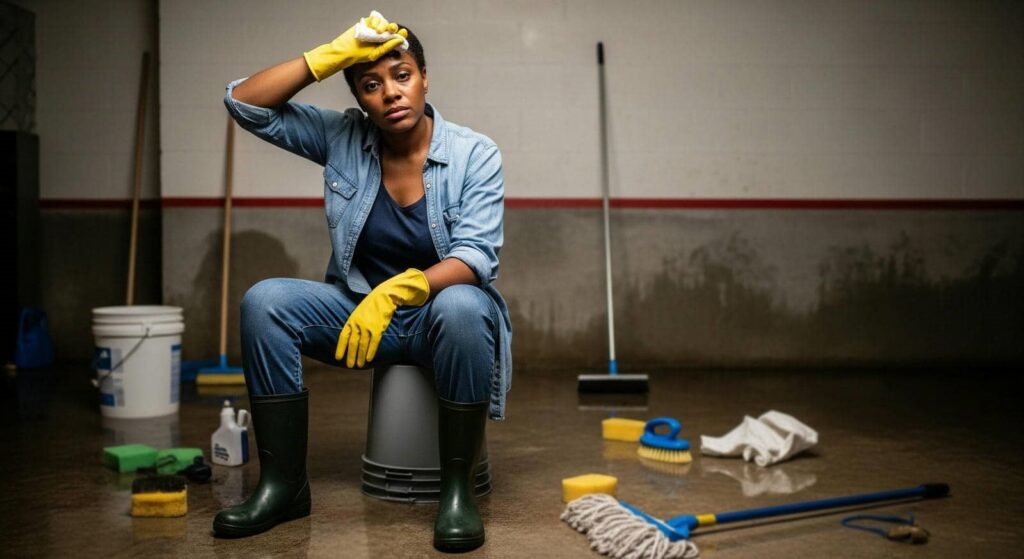
Start by donning sturdy protective clothing, like waterproof boots and gloves, to shield yourself from hazardous materials and debris. This gear not only keeps you dry but also minimizes the risk of injury.
Don’t forget your safety goggles; they’re important for protecting your eyes from dust, chemicals, and other irritants that may be present.
It’s imperative to feel secure while you work in such challenging conditions. Taking these precautions helps create a safer environment for you and those assisting you.
Avoid Contaminated Water
As you commence flood damage cleanup, steering clear of contaminated water is essential for your safety. Floodwaters can carry harmful pathogens, chemicals, and debris, posing significant health risks.
To guarantee flood safety, always assess your surroundings before entering flooded areas. Look for signs of contamination, such as unusual odors or discoloration. If water appears murky or contains floating debris, it’s best to avoid it.
Remember, even seemingly clean water can harbor hidden dangers. Wear protective gear, and avoid direct contact with floodwaters wherever possible.
Use Proper Equipment
Using the right equipment is essential for your safety during flood damage cleanup. High-quality gear, like waterproof gloves, sturdy boots, and respirators, not only protects you from contaminants but also aids in effective flood management.
Ensuring your tools are well-maintained is equally important; regularly inspect equipment for any wear and tear to avoid malfunctions during critical moments. When you invest in proper equipment and maintenance, you’re not just safeguarding yourself—you’re fostering a safer environment for your community.
Must-Have Tools for Effective Flood Damage Cleanup
When tackling flood damage cleanup, having the right tools at your disposal can make all the difference in restoring your space efficiently and effectively.
Essential flood recovery tools include powerful wet/dry vacuums, which are imperative for removing standing water quickly. High-capacity fans and dehumidifiers are also fundamental to prevent mold growth, ensuring your environment remains safe and comfortable.
You’ll want sturdy gloves and protective gear to keep yourself safe while handling debris and contaminated materials. Additionally, a moisture meter can help you assess hidden water damage in walls and floors.
Effective Techniques for Water Removal
While flood damage can feel overwhelming, employing effective water removal techniques can greatly ease your recovery process.
Start with powerful water extraction methods like submersible pumps and wet vacuums to quickly eliminate standing water. These tools are essential in minimizing damage and preventing mold growth.
Consider investing in flood cleanup innovations, such as portable dehumidifiers and air movers, which can enhance air circulation and expedite the drying process.
Don’t forget to document your progress; taking photos can be helpful for insurance claims and emotional closure.
Best Practices for Drying Out Your Home
After a flood, it’s vital that you act quickly to remove excess water from your home to prevent further damage.
Increasing air circulation and using dehumidifiers effectively can greatly speed up the drying process.
Remove Excess Water Quickly
In the aftermath of a flood, acting swiftly to remove excess water is essential for minimizing damage and preventing mold growth.
Start by using pumps or wet vacuums for effective water removal. If you have access to a professional service, consider calling them for assistance; they can expedite the process and guarantee thorough cleanup.
Time is of the essence, as lingering water can lead to structural issues and health hazards. In addition, remove soaked materials like carpets and drywall to enhance water extraction.
Remember, your prompt actions not only protect your home but also foster a sense of security for you and your loved ones.
Prioritizing flooding prevention now can save you from more significant challenges down the road.
Increase Air Circulation
Increasing air circulation is crucial for effectively drying out your home after a flood. By implementing smart airflow strategies and ventilation methods, you can considerably reduce humidity and promote faster drying.
Here are some practical tips to enhance air circulation:
- Open windows and doors to create cross-ventilation.
- Use fans to direct airflow toward damp areas.
- Make sure vents and ducts are unobstructed for ideal air movement.
- Rotate fans periodically to cover more ground and dry uneven spots.
- Consider using exhaust fans in kitchens and bathrooms to pull moisture out.
These steps not only help dry your home but also promote a healthier environment.
Use Dehumidifiers Effectively
To effectively tackle the moisture lingering in your home after a flood, using dehumidifiers can greatly enhance your drying efforts.
Start by adjusting your dehumidifier settings to the ideal level—aim for 30-50% humidity. This range promotes efficient moisture control, helping to prevent mold growth and further damage.
Place the dehumidifier in the most affected areas, ensuring it has ample airflow. Regularly check the water collection tank and empty it to maintain performance.
Additionally, consider running it continuously for the first few days, as this will speed up the drying process.
How to Prevent Mold After Flooding
Flooding can leave your home vulnerable, and taking immediate action is vital to prevent mold growth.
Mold spores thrive in damp environments, so implementing effective prevention strategies is essential. Here are some steps you can take:
- Remove standing water quickly to minimize moisture.
- Dry affected areas within 24-48 hours using fans and dehumidifiers.
- Clean surfaces with mold-resistant solutions to inhibit growth.
- Seal any cracks or gaps in walls and floors to prevent moisture intrusion.
- Monitor humidity levels to guarantee they remain below 60%.
Repairing Flood-Damaged Areas
After taking steps to prevent mold growth, it’s time to focus on repairing the flood-damaged areas of your home.
Begin by evaluating the extent of the damage, documenting everything for your flood insurance claim. Understanding what materials are salvageable versus what needs replacing is vital.
If structural elements are compromised, consider contacting restoration services for guidance. They can help you navigate repairs while ensuring safety and compliance with local building codes.
Remember, emotional support from friends and family during this process can make a significant difference.
When to Hire Flood Damage Cleanup Professionals
How can you determine the right moment to call in flood damage cleanup professionals? Recognizing when to seek help is essential for your home’s recovery.
If you notice any of the following conditions, it’s time to reach out for restoration services:
- Extensive water damage that’s beyond your control
- Mold growth or a musty smell indicating hidden moisture
- Structural issues, like sagging ceilings or walls
- Difficulty maneuvering the claims process with your flood insurance
- Need for specialized equipment to properly dry and restore your space
These professionals can’t only provide expert cleanup but also help you navigate the complexities of insurance claims.
Frequently Asked Questions
How Long Does It Typically Take for a Home to Dry Completely?
It typically takes one to two weeks for your home to dry completely, depending on moisture levels and the effectiveness of the drying process. You’ll want to monitor progress to guarantee a safe, comfortable environment.
What Types of Insurance Cover Flood Damage Cleanup Costs?
You might think your homeowner’s policy covers everything, but it often doesn’t include flood damage. Flood insurance specifically addresses cleanup costs, ensuring your policy coverage protects you when disaster strikes. It’s essential to review your options.
Are There Any Health Risks Associated With Floodwaters?
Yes, floodwaters pose significant health hazards due to water contamination. You’re at risk for infections and diseases. It’s essential to protect yourself by avoiding contact and seeking proper medical advice if exposed. Stay safe and informed.
Can I Salvage My Furniture After Flood Damage?
Can you really restore your cherished furniture after flood damage? Yes, you can! With proper furniture restoration techniques and flood insurance coverage, you’ll find hope in reclaiming your belongings and restoring a sense of home.
What Steps Should I Take Immediately After a Flood Occurs?
After a flood, prioritize safety. Follow your flood response checklist, assess damage, document everything, and contact your emergency contact list. Reach out to loved ones for support, ensuring you’re not alone during this stressful time.
Wrap-Up
In the aftermath of a flood, taking swift and informed action can feel like maneuvering through a stormy sea, but with the right tools and techniques, you can steer your way to recovery. By evaluating damage, ensuring safety, and employing effective cleanup methods, you’ll not only restore your space but also protect your home from future threats. Remember, just as the phoenix rises from the ashes, your home can emerge stronger and more resilient with diligent care and attention.