 Skip to content
When you face water damage, swift action is essential. First, you need to identify and stop the water source to prevent further issues. Then, assess the extent of the damage. It’s not just about removing the water; you must also consider the potential for mold and structural integrity. Choosing the right tools and techniques for extraction and drying can make a significant difference. What’s your next step in ensuring your space is safe and secure?
Key Takeaways
- Swiftly shut off the water source and assess damage to minimize impact and prevent further complications.
- Remove standing water using high-capacity pumps and wet/dry vacuums for effective extraction.
- Utilize dehumidifiers and moisture meters to ensure thorough drying and prevent mold growth.
- Document all damage with photos for insurance claims and to maintain a clear record of the restoration process.
- Consider professional help for extensive damage or mold growth to ensure safe and efficient cleanup.
How to Respond Immediately to Water Damage
When you discover water damage, swift action is essential to minimize its impact and prevent further complications. Your immediate response involves quickly identifying the source of the water and shutting it off, if possible.
Next, conduct a thorough damage assessment. This means checking affected areas, including walls, floors, and furniture, to determine the extent of the damage.
Remove any standing water with pumps or wet vacuums; your priority should be to lower moisture levels swiftly. Protect your belongings by relocating items to a dry area.
Document the damage with photos for insurance claims later. Remember, timely intervention mitigates damage and fosters a sense of community and support among those who understand your situation.
Assessing the Extent of Water Damage
How can you accurately gauge the extent of water damage in your home? Start by identifying damage indicators like discoloration, warping, and damp odors.
Conduct a thorough moisture assessment using a moisture meter to pinpoint affected areas. Check walls, floors, and ceilings—every little detail matters.
- The heartache of losing cherished belongings
- The anxiety of hidden mold lurking out of sight
- The frustration of costly repairs piling up
- The relief of catching damage early
Choosing the Right Tools for Water Extraction
To effectively tackle water extraction, you need the right equipment tailored to the severity of the damage.
Invest in essential extraction tools like submersible pumps and wet/dry vacuums, ensuring they match the volume of water present.
Don’t overlook safety gear; it’s vital to protect yourself from potential hazards during the cleanup process.
Essential Extraction Equipment
Choosing the right extraction equipment is vital for effective water damage cleanup. The tools you select speed up the process and ensure safety and efficiency.
To tackle water extraction properly, consider investing in:
- High-capacity pumps for quick water removal
- Industrial-grade wet/dry vacuums for versatility
- Dehumidifiers to prevent mold growth
- Moisture meters for precise assessment
Regular equipment maintenance is important to maximize performance and lifespan. By keeping your tools in top shape, you’ll prevent future mishaps and stay prepared for any water damage situation.
Safety Gear Considerations
As you gear up for water extraction, prioritizing safety gear is just as important as selecting the right equipment.
Start with safety gear types like waterproof gloves, boots, and masks to protect against contaminants and slipping hazards. Choose protective equipment that fits well and offers comfort, ensuring you can work efficiently without distraction.
Don’t overlook eye protection; goggles can guard against splashes and debris while you’re maneuvering around wet areas. Also, consider using a hard hat if there’s a risk of falling objects.
Effective Techniques for Structural Drying
While water damage can seem intimidating, employing effective structural drying techniques can greatly mitigate long-term effects and preserve your property.
Start by utilizing thermal imaging to identify hidden moisture pockets, allowing you to target drying efforts efficiently. Follow this with moisture mapping to create a thorough plan for addressing affected areas.
- Protect your investment and ensure your home’s longevity.
- Restore your peace of mind by acting swiftly and effectively.
- Rebuild a safe, healthy environment for your loved ones.
- Foster a sense of community by sharing your knowledge and experiences.
Understanding the Importance of Dehumidification
Dehumidification plays a critical role in the aftermath of water damage, as it directly impacts the speed and effectiveness of the drying process. By controlling humidity levels, you can greatly reduce the time it takes for your space to recover.
One of the key dehumidification benefits is preventing further damage to your property, such as warping or weakening of structures and materials. Additionally, efficient humidity control helps to protect your belongings, ensuring that items like furniture and electronics aren’t adversely affected.
Implementing dehumidifiers accelerates drying while enhancing air quality, making the environment safer and more comfortable. Prioritizing dehumidification is essential for a thorough cleanup strategy that fosters a sense of security and belonging in your home.
Preventing Mold Growth After Water Damage
After managing humidity levels with effective dehumidification, the next step is to focus on preventing mold growth, which can thrive in damp conditions.
Implementing proactive mold remediation strategies is essential. First, ensure proper ventilation in your home.
Next, regularly check for leaks in plumbing and roofs. Additionally, use moisture-resistant materials when repairing water-damaged areas.
- Mold can cause serious health issues.
- It can damage your home’s structure and belongings.
- Mold removal can be expensive and time-consuming.
- You deserve a safe and healthy living space.
Top Cleaning Techniques for Water Damage Recovery
To effectively recover from water damage, you first need to assess the extent of the damage to prioritize your cleaning efforts.
Next, employing effective drying methods is essential to minimize structural harm and prevent further issues.
Finally, implementing mold prevention techniques will safeguard your space and ensure a healthier environment.
Assessing Damage Extent
When you encounter water damage, accurately evaluating the extent of the damage is essential for effective recovery. Start by identifying damage indicators, such as discoloration, warping, or mold growth.
Use thorough inspection methods, including visual assessments and moisture meters, to understand how deeply the water has penetrated.
- Feeling overwhelmed by the destruction
- Uncertainty about the recovery process
- Concern for your home’s safety and integrity
- The desire to restore your space to its former glory
Effective Drying Methods
While evaluating the damage is essential, implementing effective drying methods is equally important in your recovery process.
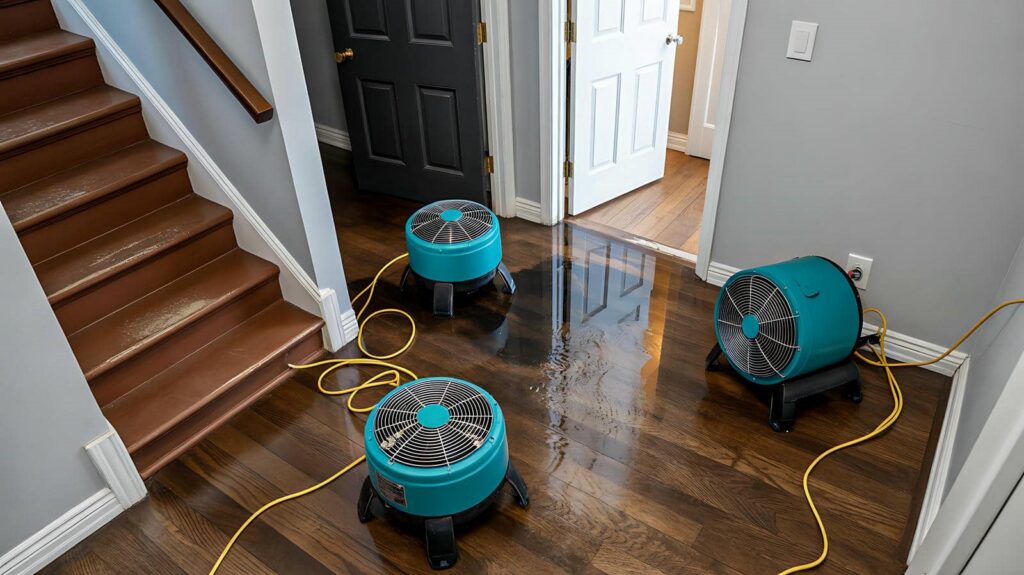
Start by utilizing advanced drying techniques, such as air movers and dehumidifiers, to expedite moisture removal. Position air movers strategically to create airflow, enhancing evaporation. Use moisture meters to monitor dampness levels in walls and floors, ensuring you target wet areas effectively.
Keep an eye on humidity levels; maintaining a lower humidity accelerates drying. If structural materials are saturated, consider removing them to facilitate deeper drying.
Mold Prevention Techniques
Effective mold prevention techniques are essential after water damage, as even the slightest moisture can lead to significant growth.
To protect your home and loved ones, consider implementing the following strategies:
Use mold resistant materials in construction and repairs to create a protective barrier.
Install proper ventilation strategies in affected areas to ensure adequate airflow and moisture control.
Regularly inspect and maintain gutters and downspouts to prevent water accumulation.
Monitor humidity levels with a hygrometer, keeping them below 60% to discourage mold development.
Identifying Water Damage and Repairing Structural Issues
Identifying water damage is essential for preventing further deterioration of your property. Start by inspecting areas prone to moisture, such as basements, attics, and around windows.
Look for signs like discoloration, peeling paint, or warped materials, which can indicate compromised structural integrity. Use a moisture meter to pinpoint hidden dampness that may not be visible.
Once detected, address leaks immediately to ensure effective moisture control. Repair structural issues by replacing damaged wood, reinforcing beams, or applying waterproof sealants.
Don’t overlook the importance of proper drainage systems to divert water away from your home. By taking these proactive steps, you’ll restore your property and foster a safe environment for you and your loved ones.
When to Call in Professional Water Damage Restoration Services?
If you notice extensive water damage that exceeds your ability to manage, it’s time to contemplate professional help.
Mold growth can become a serious issue if not addressed promptly, and experts can assess your property’s needs effectively.
Additionally, they possess specialized equipment that ensures thorough cleanup and restoration, safeguarding your home from future problems.
Extensive Water Damage Assessment
When faced with extensive water damage, knowing when to call in professional restoration services can make all the difference in preventing long-term structural issues and health hazards.
Evaluating water damage severity and performing moisture content analysis are critical steps. If you notice any of the following, it’s time to seek help:
- Persistent water pooling that doesn’t drain
- Unpleasant odors indicating hidden moisture
- Warping or discoloration of walls and floors
- Signs of mold or mildew growth
These indicators signal that the damage is beyond DIY repairs.
Professionals use advanced technology to evaluate moisture levels and ensure a thorough cleanup, safeguarding your home and health.
Don’t hesitate; reaching out for expert assistance fosters a sense of belonging in your community.
Mold Growth Prevention Needs
As moisture lingers in your home, the risk of mold growth escalates, making it essential to act swiftly.
Mold spores thrive in damp conditions, and if humidity control isn’t managed effectively, you could face significant health risks and property damage.
Monitor humidity levels, keeping them below 60%, and ensure proper ventilation in areas prone to moisture, like bathrooms and kitchens.
If you notice persistent dampness or visible mold, it’s time to call in professional water damage restoration services.
They possess the expertise and specialized techniques to eliminate mold before it spreads.
Don’t let mold become a hidden menace; taking proactive steps to prevent its growth fosters a safer and healthier living environment for you and your loved ones.
Specialized Equipment Requirements
Mold prevention is just one aspect of the extensive measures required after water damage; specialized equipment plays a vital role in effective restoration.
When you face severe water damage, it’s often best to enlist professionals equipped with specialized gear and advanced technology. These tools ensure thorough drying, dehumidification, and mold prevention that you mightn’t achieve on your own.
Consider the emotional impact of neglecting proper restoration:
- Health risks from mold exposure
- Damage to cherished belongings
- Increased repair costs down the line
- The stress of prolonged recovery
Don’t underestimate the benefits of professional help; they’ve the expertise and equipment to restore your space safely and efficiently, bringing peace of mind to you and your family.
Future Water Damage Prevention Tips
To effectively prevent future water damage, homeowners must first assess their property’s vulnerabilities and implement targeted strategies.
Start by exploring waterproofing techniques like sealants and membranes, which can protect basements and crawl spaces from moisture intrusion.
Regularly check and maintain gutters and downspouts to ensure they direct water away from your foundation.
Consider investing in drainage solutions, such as French drains, to manage excess water during heavy rains.
Additionally, inspect plumbing for leaks and replace aging pipes to avoid unexpected bursts.
Educating yourself on these preventative measures safeguards your home and fosters a sense of community among homeowners who prioritize resilience and safety.
Frequently Asked Questions
How Long Does It Take for a Property to Completely Dry After Water Damage?
It typically takes 3 to 7 days for a property to completely dry after water damage, depending on moisture levels and drying time. Dehumidifiers and proper ventilation can greatly expedite the process, ensuring thorough drying.
Can I Use Regular Household Fans to Aid in Drying?
Yes, you can use regular household fans, but their fan efficiency might be lower than specialized equipment. Combine them with drying techniques like dehumidifiers for ideal results, ensuring a quicker and more effective drying process.
What Are the Health Risks Associated With Water Damage?
If you don’t act fast, water damage can lead to mold growth and the spread of waterborne diseases. You’ve got to stay vigilant, ensuring proper ventilation and quick drying to protect your health and home.
How Can I Tell if My Belongings Are Salvageable?
To determine if your belongings are salvageable, conduct a salvage evaluation and a damage assessment. Check for mold growth, structural integrity, and odor. If items feel damp or discolored, they likely need professional restoration or replacement.
Is It Safe to Return to My Home During Cleanup?
It’s best to wait until professionals assess your home safety. During cleanup, make certain you wear protective gear, avoid wet areas, and check for electrical hazards to minimize risks and protect your belongings.
Review
In the aftermath of water damage, swift action can mean the difference between minor repairs and extensive renovations. While you can tackle initial cleanup with the right tools and techniques, don’t underestimate the value of professional expertise for severe cases. Balancing your DIY efforts with expert assistance restores safety and protects your investment. By combining immediate response with preventative measures, you’re not just fixing the damage—you’re fortifying your home against future threats.